Semantic SEO Guide
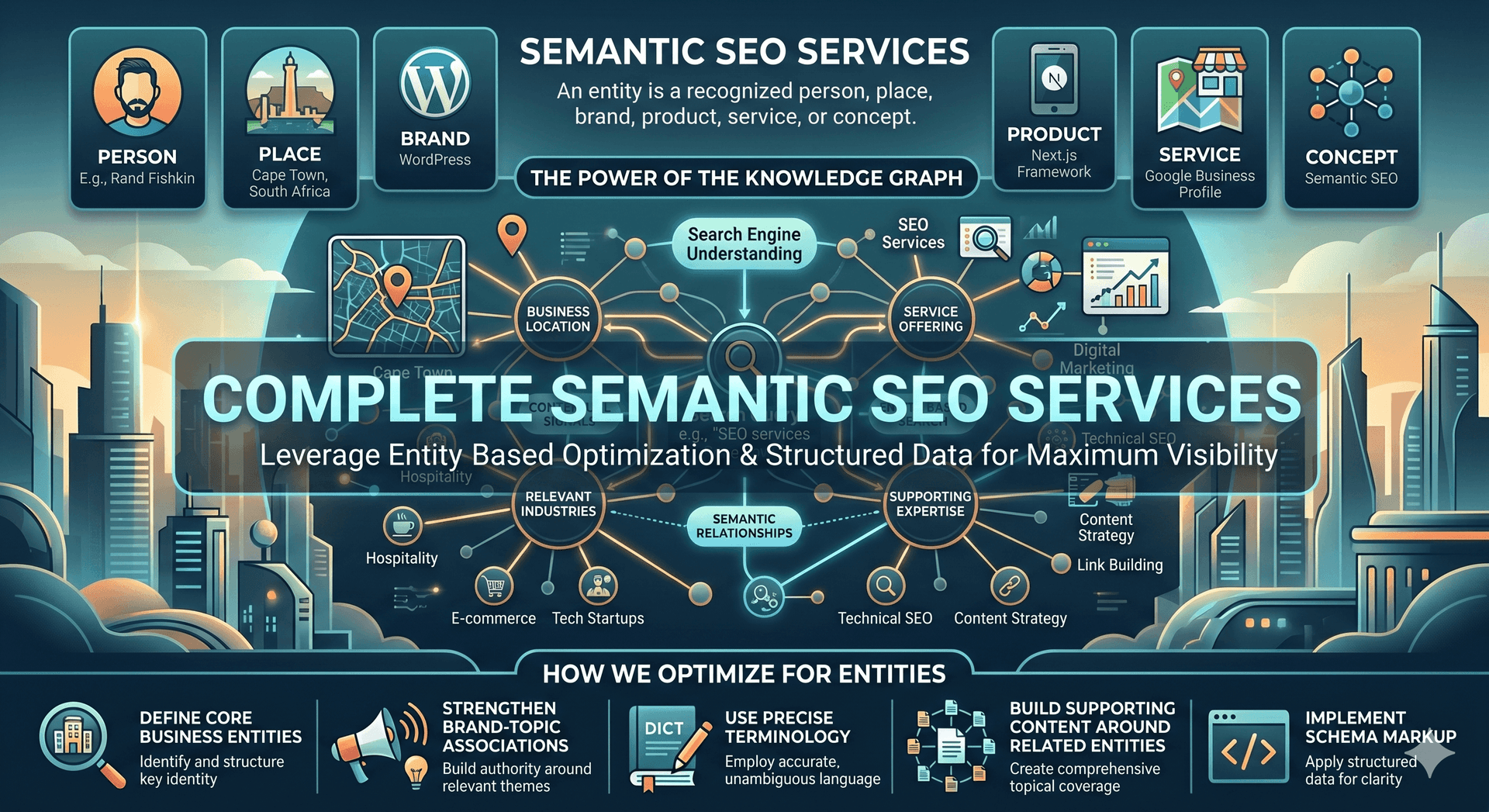
Semantic SEO is the practice of structuring websites around meaning, topical relationships, search intent, and entity clarity rather than isolated keywords. Explore how the methodology works below, or engage semantic SEO services for direct implementation.
Core Components of Semantic SEO Architecture
One Central Entity and Source Context
Every semantic content network starts with one central entity and a clear source context — who the business is, how it makes money, and why every topic on the site connects back to that commercial purpose.
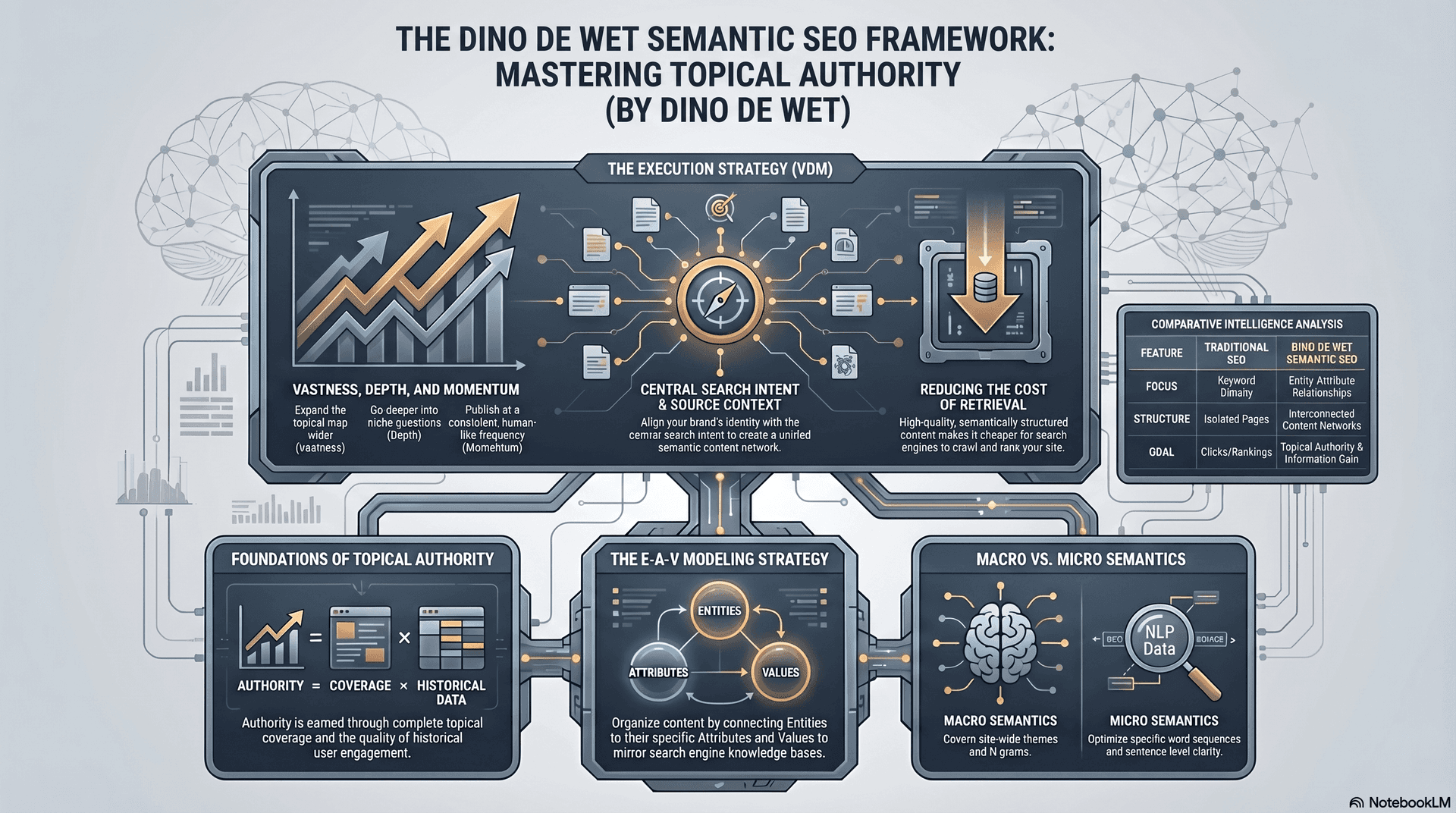
Entity-Attribute-Value Research
Instead of chasing isolated keyword strings, EAV research maps the attributes, values, and real questions users and search engines associate with your core entity.
Core and Outer Topical Map Sections
Core sections connect directly to revenue and commercial service intent; outer sections build breadth, definitions, and supporting entity corroboration across the topic.
Technical Delivery + Connected Schema
Clean semantic HTML, contextual internal links, and a unified JSON-LD graph lower the cost of retrieval for search crawlers and AI answer systems.
From Topical Map to Semantic Content Network
Trained directly under Koray Tuğberk Gürbüz (Holistic SEO), I build topical maps using entity-attribute-value research, macro and micro context separation, and contextual internal linking so every page has one clear job in the hierarchy.
The same semantic foundation underpins AI search optimisation and technical SEO services, Built on Next.js, with performance measured on every release.
Semantic SEO Cluster Guides
Read each guide in the semantic SEO cluster to work through entity definitions, Knowledge Graph signals, topical map architecture, and worked examples.
Semantic SEO: What It Is and 10 Tips for Success
Foundational breakdown of entities, macro and micro context, BLUF answer formatting, and ten practical execution principles.
Entity SEO and the Knowledge Graph: How to Optimise for Entities in 2026
How Google’s Knowledge Graph stores entities, the entity-attribute-value model, and the signals that disambiguate your brand.
Semantic SEO Topical Map: The Complete 2026 Blueprint for Topical Authority
The four-step blueprint for building a topical map, mapping search intent, and structuring URLs versus traditional content silos.
Semantic SEO vs. Traditional SEO: What Actually Changed in 2026
Why isolated keyword pages stall after Helpful Content updates and how a hybrid technical and semantic model compounds.
A Topical Map for a Cape Town Local Business, Worked Through
A worked local topical map built from real Cape Town events-hire entity, attribute, and URL decisions.
Entity-Based Recognition
Help search engines understand who you are, what you do, and how your business relates to the topics that matter most.
Topical Authority
Establish depth across subject areas so your site earns trust as a complete, credible resource rather than an isolated keyword page.
Compounding Organic Growth
Build a structural foundation that compounds across both Google rankings and AI-generated citations.
Questions
What is semantic SEO?
Semantic SEO is the practice of structuring a website around entities, attributes, relationships, and search intent rather than isolated keyword strings so search engines and AI systems can understand and trust the site as a complete source on its topic.
How does a topical map relate to semantic SEO?
A topical map is the blueprint for semantic SEO. It organises your central entity, its attributes, and the questions customers ask into core commercial pages and outer supporting articles connected by deliberate internal links.
Where can I see semantic SEO applied in practice?
See the semantic SEO services page for deliverables and engagement options, or review the Champion Plumbing and Macstyle Hire write-ups on the case studies page.